

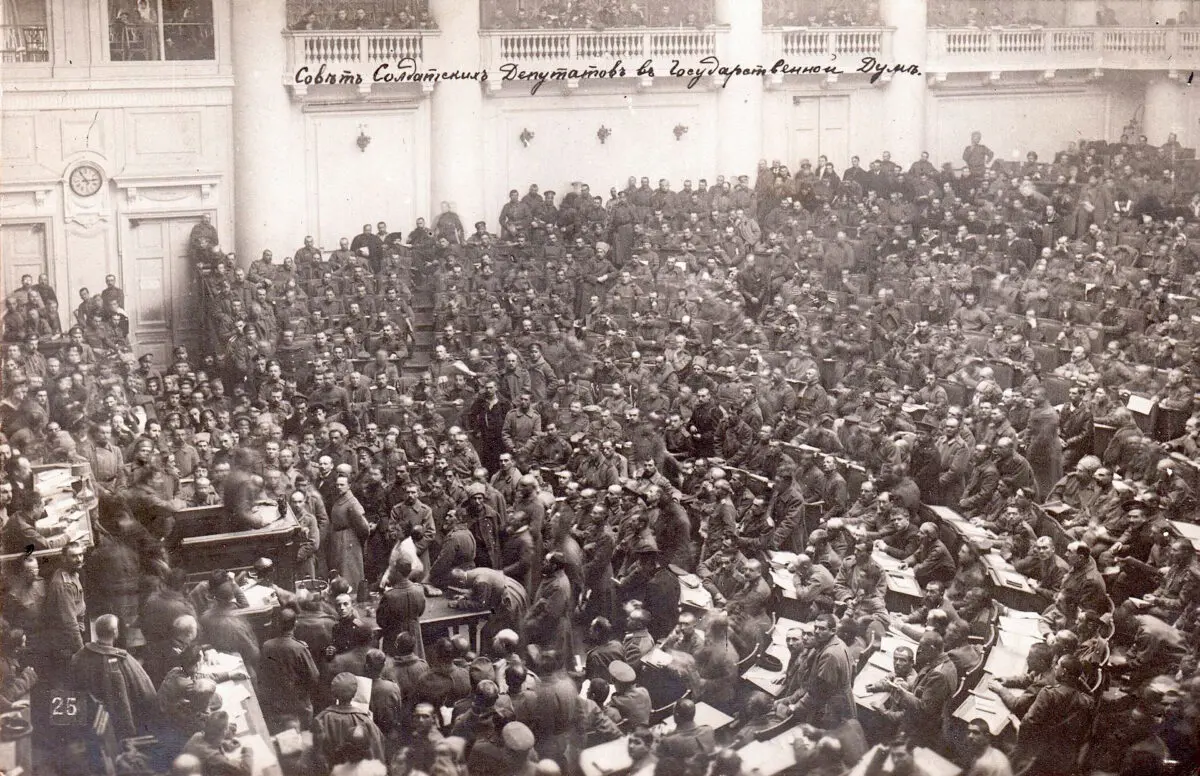
Underlying the global crises facing the working class is a ruling oligarchy that subordinates the whole society to profit and personal wealth accumulation. Breaking its stranglehold over economic and political life is a revolutionary task.
Karl Marx (b. 1818, present day Germany) originated the materialist conception of history and, along with Frederick Engels, founded the modern revolutionary socialist movement. In his lifetime, he and Engels placed the early, utopian socialist aspirations on scientific foundations, and laid the basis for a revolutionary political movement of the international working class.
Marx did not claim to have discovered that the class struggle is the motive force of history, but rather that the existence of classes is connected with certain historical phases in the development of production. Moreover, he discovered the class struggle necessarily leads to the dictatorship--that is, the political predominance--of the proletariat, the working class, which is the vast majority of the society. With the abolition of private property of the means of production, this dictatorship constitutes the abolition of all classes and the beginning of the transition to a classless society.

Workers of the world, unite! You have nothing to lose but your chains. -- The Communist Manifesto

By extending philosophical materialism into the realm of history and social relations, Marx demonstrated socialism to be a necessary development arising out of the inherent contradictions of the capitalist system, which operates according to specific and discoverable laws. In doing so, he overcame the limitations of the mechanical materialism of the 18th century and the idealist mystifications of Hegel’s dialectical logic.
“...The genius who continued and consummated the three main ideological currents of the nineteenth century, as represented by the three most advanced countries of mankind: classical German philosophy, classical English political economy and French socialism combined with French revolutionary doctrines in general.” - Lenin, 1915
Marx's greatest achievement, the writing of Capital, further substantiated the materialist conception of history. Its central concepts -- labor power, constant and variable capital, surplus value, the declining rate of profit, exploitation, the fetishism of commodities, the industrial reserve army, and the relative and absolute impoverishment of the proletariat-- are not just indispensible to a scientific understanding of capitalism. They are necessary for a basic understanding of daily political, economic and social developments. Though several generations of bourgeois economists have devoted their professional lives to refuting Marx’s work, their efforts continue to be confounded by the by the depth and scope of the capitalist crisis and the force of Marx’s dialectical method and historical insight.
One hundred years after the outbreak of World War I and the Russian Revolution, none of the problems of the twentieth century—devastating wars, economic crises, social inequality, and dictatorship—have been resolved. In fact, they are posed even more sharply today.
North argues against contemporary historians who maintain that the dissolution of the USSR signaled the “end of history” (Fukuyama), or the “short twentieth century”(Hobsbawm). Disputing the postmodern view that all history is merely subjective “narrative,” he insists that a thorough materialist knowledge of history is vital for humanity’s survival in the 21st century.
Marxism is not a set of conclusions formulated more than a century ago. It exists as the real movement that continues the conscious struggle within the international working class to develop the program, perspective and practice of world socialist revolution.
All of Marx's extraordinary theoretical achivements are inseparable from the struggle by Marx and the Marxist movement to organize the working class politically in opposition to capitalism. Marx and Engels were party to the founding of the International Workingmens Association in 1864, later known as the first Socialist International, working to unite working class parties across different countries.
By the start of the 20th century, nation-states were increasingly integrated into a deeply interconnected world economy and politics had become thoroughly global. The system of nation-states that had been consolidated through the 19th century came under enormous strain, producing bitter and intensifying struggles between the most powerful capitalist states for world domination. Around this time. the term “imperialism” came into common usage.

Among the European countries, Germany had the largest, most powerful and politically advanced working class. It was the birthplace of Marx and Engels, and the country whose industrial development had given rise, under the influence of Marxism, to the mass Social Democratic Party (SPD). But the SPD and virtually all the associated parties of the Second International betrayed the program of international socialism in August 1914 when they supported their capitalist governments' entry into what became WWI.
The building of the Third International determined the perspective and program of the Bolshevik Party in the Russian revolutions of 1917. Together with Trotsky’s theory of permanent revolution, it formed the basis for the victory of the October Revolution and from the very outbreak of the war, Lenin advocated a thorough break from the opportunists, calling for the transformation of the war into a civil war--that is, into a socialist revolution.
The founding of the Third International under the leadership of Lenin and Trotsky, in the aftermath of the 1917 Russian Revolution, was aimed at the rebuilding of revolutionary parties based on socialist internationalism. The German Communist Party (KPD) emerged as the largest section, outside of the Soviet Union, of the new International. But its development was undermined by a crisis of political leadership.

The murders of Rosa Luxemburg and Karl Liebknecht in January 1919, just two weeks after the KPD was founded, deprived the party of its most experienced leaders. The problem of leadership was intensified by the growth of the bureaucracy led by Stalin within the Soviet Union, its repudiation of the program of world socialist revolution and the adoption of the openly nationalist program of “socialism in one country.”
Trotsky, the leader of the Left Opposition within the Russian Communist Party, opposed the nationalist revision of the Marxist program disorienting the new Communist parties, and subordinating them to the national interests of the Soviet bureaucracy.
We met with success in the October Revolution, but the October Revolution has met with little success in our press. ... Having achieved the revolution, we seem to have concluded that we should never have to repeat it. It is as if we thought that no immediate and direct benefit for the unpostponable tasks of future constructive work could be derived from the study of October; the actual conditions of the direct preparation for it; the actual accomplishment of it; and the work of consolidating it during the first few weeks.
Such an approach – though it may be subconscious – is, however, profoundly erroneous, and is, moreover, narrow and nationalistic. We ourselves may never have to repeat the experience of the October Revolution, but this does not at all imply that we have nothing to learn from that experience. We are a part of the International, and the workers in all other countries are still faced with the solution of the problem of their own “October.” -- Trotsky, Lessons of October
In conducting the most principled and politically conscious struggle within the international working class to develop the program, perspective and practice of world socialist revolution, Trotskyism has demonstrated itself to be the Marxism of the 21st century. This heritage, embodied in the political program and practice of the Fourth International founded in 1938, is continued in the struggle of the Socialist Equality Parties and International Committee against Stalinism, social Democracy and all forms of opportunism, centrism and pseudo-left politics.
