

The Left Opposition leads the struggle against Stalinism
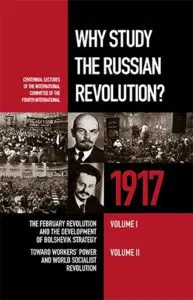
An understanding of the origins of the Left Opposition, led by Leon Trotsky, must be based on an understanding of the Russian Revolution and the first six years of the Soviet state. The revolutions in Russia in 1917 were the most staggering political transformations ever witnessed within a single year. Up to that point, Russia had been ruled by an autocratic monarchical regime whose ruling dynasty went back more than 300 years.
Neither Lenin nor Trotsky believed Russia to be economically ripe for socialism. Its industrial development lagged far behind the capitalist states of Europe and North America. Socialist revolution was necessary in Russia because world conditions left no other possibilities for progressive national development. The development of the revolution, and the enormous confidence in the working class that it expressed, was widely understood by Marxists to depend on international events.

In the aftermath of the Civil War, the failed uprisings in Europe, especially in Germany, conservative tendencies in the Soviet Union grew. Attacks on Leon Trotsky and the Theory of Permanent Revolution that began with the lie that “Trotsky underestimates the peasantry”, expressed a growing hostility within the state and party bureaucracy to the internationalist program of the October Revolution.
The consolidation of political power by Stalin, and the dictatorship his name is associated with, was not an inevitable product of the revolution. It developed out of contradictions specific to a workers’ state established in an underdeveloped country and isolated by the defeats of the international revolution. The legacy of economic backwardness inherited from Tsarist Russia and a disastrous seven years of imperialist war (1914-17) and civil war (1918-21) imposed immense burdens on the effort to build the Soviet economy.
The fate of the revolution in Russia depended fully on international events. That the Bolsheviks have based their policy entirely upon the world proletarian revolution is the clearest proof of their political farsightedness and firmness of principle and of the bold scope of their policies. -- Rosa Luxemburg
Trotsky and his supporters—many of whom were the most important leaders of the Bolshevik Revolution—formed the Left Opposition in 1923 to reform Communist Party policy in the Soviet Union, criticizing the decay of inner-party democracy and advocating an economic policy that placed greater emphasis on the development of state industry, socialist planning and lower prices of industrial goods. The Stalin faction pushed for greater market liberalization, an orientation to wealthier sections of the peasantry and limited development of the state sector and economic planning. In his last writings, Lenin warned of the growing bureaucratization of the Communist Party and called for the removal of Stalin as general secretary. But Lenin's death in 1924 strengthened the Stalin faction.
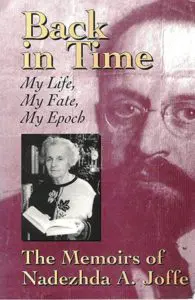
I was personally acquainted with many participants in the October Revolution. Among them were people who renounced a calm, comfortable or prosperous life because they fervently believed in a radiant future for all mankind.
Many of those whom Stalin considered to be the Opposition paid with years of exile, prison and camps for fighting him, and for understanding that the socialism which had been built in the Soviet Union was not the same socialism about which the best minds of mankind had dreamed.
- Nadezhda Joffe
Trotsky warned that policies of the Stalinist regime could not assure the triumph of socialism in the USSR, and were instead preparing the way for the restoration of capitalism. Through the late 1920s and 1930s, the Opposition faced exile, imprisonment and later lethal violence at the hands of Stalinist police, as well as hostile treatment from the imperialist governments. Leading Oppositionists were assassinated by the GPU in Europe, in Russia itself and in North America. Nevertheless, in the face of the enormous challenges, and at the beginning of World War II, they succeeded in establishing the Fourth International. Several attempts on Trotsky's own life were made by the Stalinist police and in 1940, he was assassinated in Mexico by an agent that had infiltrated the Fourth International.
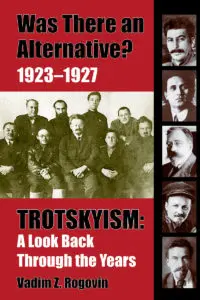
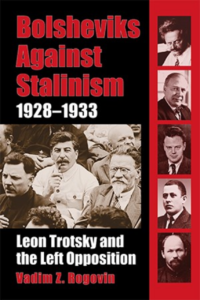
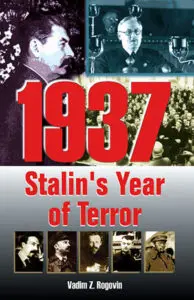

Dissolution of the USSR
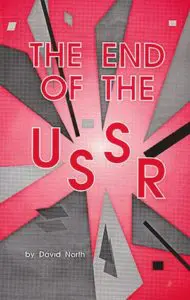
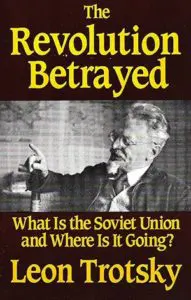
On December 26, 1991, the USSR was formally dissolved by the Stalinist bureaucracy. The events of the early 1990s offer an objective means to compare the scientific value of Trotsky’s masterpiece of Marxist analysis, The Revolution Betrayed, to the analysis of academics, journalists and middle class political tendencies who foresaw nothing. None predicted the Soviet government would repeal all restriction on private ownership of the means of production and seek to totally integrate the USSR into the institutions of world capitalism.
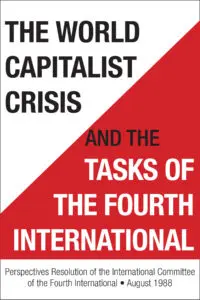
“The shortage of technology and continuing contradictions between industry and agriculture can only be resolved through access to the world market. There are only two roads to the integration of the Soviet Union into that market--that of Gorbachev leading towards capitalist restoration and that of the world socialist revolution.” -- What is Happening in the USSR? Gorbachev and the Crisis of Stalinism, 1987 in "The Fourth International and the Perspective of World Socialist Revolution"
The ICFI alone, basing itself on Trotsky's analysis of the counterrevolutionary role of Stalinism, provided prescient analysis of the crisis of the Stalinist regimes and intervened powerfully in Eastern Europe and the Soviet Union, fighting for the defense of the conquests of the October Revolution through a political revolution by the working class against the bureaucracy and the international extension of the revolution as the only alternative to capitalist restoration.