



This volume examines the bloodiest period of the Stalinist repression of political opposition in the Soviet Union, debunking the myth that the Great Purges were merely the product of Stalin’s paranoia and had no overriding political logic. Through a meticulous examination of original sources, including archival documents only made available for research in the 1990s, Professor Vadim Rogovin argues that the ferocity of the mass repression was directly proportional to the intensity of resistance to Stalin within the Communist Party of the Soviet Union (CPSU), particularly the opposition inspired by and associated with the exiled Bolshevik leader Leon Trotsky.
“Stalin’s Terror of 1937-1938: Political Genocide in the USSR” is the fifth volume of Rogovin’s monumental seven-volume history of the political conflicts within the CPSU and the Communist International between 1922 and 1940. It is the second volume to be published in English, with a translation by Frederick S. Choate.
Rogovin bases his analysis on scrupulous research, quoting from newly translated or unpublished documents, including memoirs, meeting minutes, newspaper articles and trial transcripts. He documents the reaction of different social layers to the purges, including workers, peasants, non-party intellectuals and the CPSU rank-and-file. This book includes rarely published photographs of the prison camps, documenting the lives of those labeled by Stalin “enemies of the people.”
The volume analyzes such critical events as the Bukharin-Rykov trial, last of the infamous show trials; the massacre of Trotskyists in the Vorkuta slave-labor camp; and the assassination by Stalinist agents of Leon Sedov, Trotsky’s son, and other oppositionists outside the Soviet Union. It concludes with an examination of how the purges transformed the CPSU and Soviet society as a whole.
Book Review: Defending historical truth Stalin’s Terror of 1937-1938: Political Genocide in the USSR
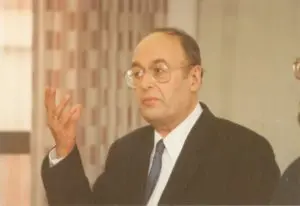 Vadim Z. Rogovin (1937-1998) wrote about social inequality in the USSR and its implications for social justice, labor productivity, and social morality in Soviet society. Gaining access to Left Opposition writings in the 1960s and 1970s, he became convinced of the correctness of Leon Trotsky’s opposition to Stalin. In the 1990s, he wrote a seven-volume series on the rise of Stalinism and the history of the socialist-based opposition to Stalin’s rule.
 In the late 1980s, he became an outspoken critic of Mikhail Gorbachev’s pro-market economic reforms and their negative impact on the living standards of the broad mass of the population. His articles in the popular Soviet press about the positions of the Left Opposition on major questions of politics and policy were widely read.