
Historic class battles are on the horizon. Global protests have erupted against the genocide in Gaza and against authoritarian rule worldwide. In 2025, the US saw the largest protests in its history, as millions marched against Trump's dictatorship of the oligarchy, demanding an end to attacks on democratic and social rights, the destruction of jobs and the disbanding of the ICE Gestapo.
The second Trump administration announced from “day one” an assault on the constitutional rights of the US population. The targeting of immigrant and refugee workers is the spearhead for broad attacks on the entire working class, as further tax cuts for the rich are enacted and every social program won by workers through decades of struggle are dismantled.
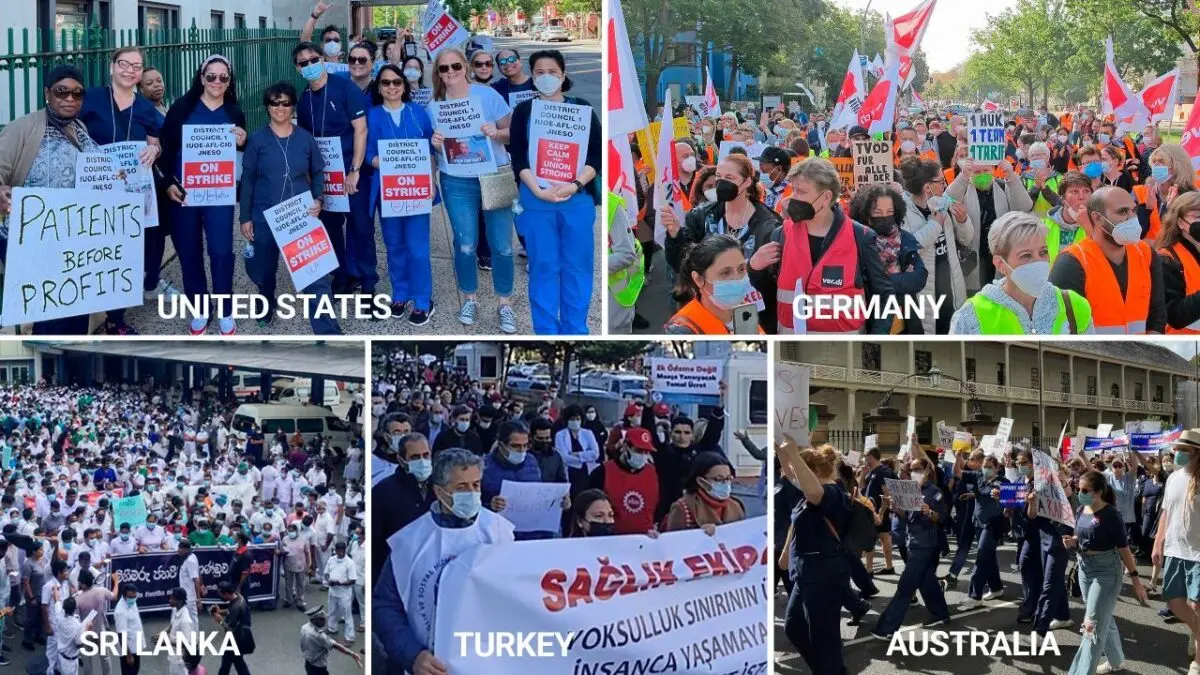
The processes in the US are in fact universal. Around the world, capitalist governments are staggered by massive political crises, confront popular opposition and rely on authoritarian measures in trying to stabilize class rule. But every step taken only deepens their crisis.
Increasingly, strikes are coming into direct conflict not only with the ruling class but also the corrupt trade union apparatus, as the teachers' wildcat strikes of 2018 did. They are also taking on a broadly international character, like that of the Matamoros auto parts workers in 2019 and the Volvo strike of 2021.
The wealth of the oligarchy must be expropriated and its stranglehold on social life abolished. This requires the mobilization of the working class, on a world scale, to take political power, establish democratic control over the process of production and reorganize society on the basis of socialism—that is, on the basis of social need, not private profit.


The economic crash of 2008 set off the deepest world recession since the 1930s, resulting in the destruction of tens of millions of jobs around the world. A historically unprecedented government bailout of the banks was undertaken, as world governments, led by the US under the Obama administration, handed out trillions of dollars to the financial speculators. As a condition of the many bailouts, 50% wage cuts were imposed on US autoworkers, and declining wages, rising living costs and growing indebtedness on the wider working class.
Intensified exploitation in manufacturing, logistics, healthcare, construction and other fields have caused industrial injury and deaths on a scale not seen in decades. Low wage and casual work proliferate. Instead of creating opportunities for workers to have more free time, the extraordinary developments in artificial intelligence are being used to slash jobs on a massive scale. Colleges and universities have been proletarianized through a large, poorly paid workforce of graduate students and adjunct instructors.

The globalization of production has brought about a vast expansion of the international working class... The same processes...have produced common conditions of exploitation. Thus the globalization of production has laid the foundations, as never before, for the international unification of the working class in a common struggle against the transnational corporations and international capital.
At the same time, globalized production, undermining the national basis for the organization of economic life, has laid the objective foundations for the development of a planned world socialist economy.

The bitter experiences of these years have led to widespread anger and disillusionment with the entire political establishment that is taking on explicitly anti-capitalist form. Millions worldwide were killed in the ongoing COVID-19 pandemic without a single serious strike organized by the trade union leaderships to demand an end to the mass infection, disability and death. It was only through independent action taken by the rank and file that production lines were stopped and demands made that plants be cleaned.
Even if a renaissance of spontaneous militancy of a syndicalist character were to occur—and such a development would be unthinkable without explosive rank-and-file rebellions against the old bureaucratic organizations—the development of such a promising movement along revolutionary lines would depend upon the independent work of the Marxist party, fighting to bring socialist consciousness into the working class. - 'Why are the trade unions hostile to socialism?' in The Russian Revolution and the Unfinished 20th Century
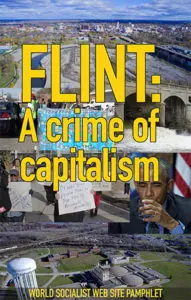
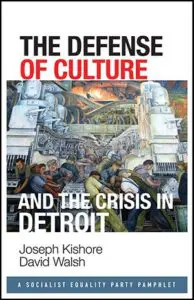
These and many other critical experiences of the working class mark out the enormous strength and determination of the working class and the burning necessity for the formation of organizations democratically controlled by and for workers that can advance the class demands for wages, healthcare, education, infrastructure and access to the arts and culture.
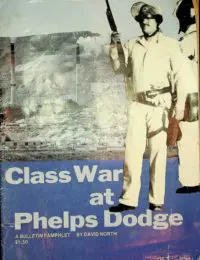
A powerful eyewitness account of one of the most important labor struggles of the past half-century. The betrayal of the 1983 Arizona copper miners’ strike by the AFL-CIO bureaucracy played a critical role in the destruction of the trade union movement in the United States.
In 2021, the International Committee of the Fourth International and its affiliated Socialist Equality Parties formed the International Workers Alliance of Rank-and-File Committees (IWA-RFC). The IWA-RFC develops the framework for new forms of independent, democratic and militant rank-and-file organizations of workers in factories, schools and workplaces internationally.