


The working class has the right and the duty to set its own considered class will above all the fictions and sophisms of bourgeois democracy
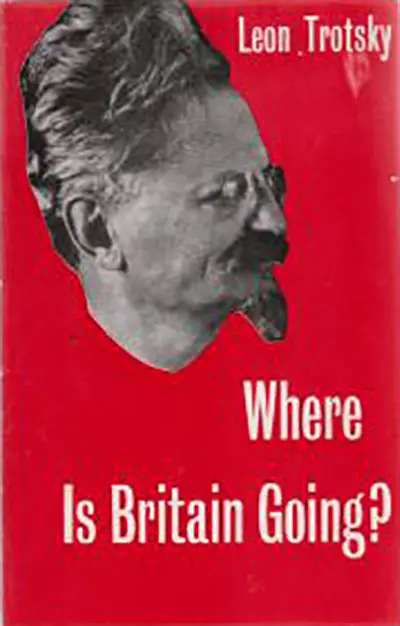
In this slim work from 1925, Trotsky assesses the economic and political aspects of the decline of the British empire and the corollary of that decline in the emergence of working class militancy, virtually predicting Great Britain’s general strike of the following year. In this work, Trotsky argues from a number of perspectives the need for revolutionary struggle against the ultimately regressive institutions of bourgeois democracy and morality. Where Is Britain Going? includes three particularly important chapters for understanding Trotsky’s thought on this matter: “Mr. Baldwin and…Gradualness,” “The Question of Revolutionary Force,” and “Trade Unions and Bolshevism.”
Trotsky’s remarkable polemical essay on “gradualness” presents a succinct Marxist history of Britain that demonstrates the revolutionary character of that nation’s most important historical changes, as well as the dependence of British reformism on international revolutions, such as the French Revolution and the US Civil War. “The Question of Revolutionary Force” dismantles bourgeois objections to the revolutionary use of force by turning the question back upon the bourgeoisie, and “Trade Unions and Bolshevism” argues in support of workers’ compulsory payments to the Labour Party. Where Is Britain Going? also provides Trotsky’s Marxist critique of Fabianism.
Contents
I. The Decline of Britain
II. Mr. Baldwin and…Gradualness
III. Certain “Peculiarities” of British Labour Leaders
IV. The Fabian “Theory” of Socialism
V. The Question of Revolutionary Force
VI. Two Traditions: The 17th-century Revolution and Chartism
VII. Trade Unions and Bolshevism
VIII. Prospects
