
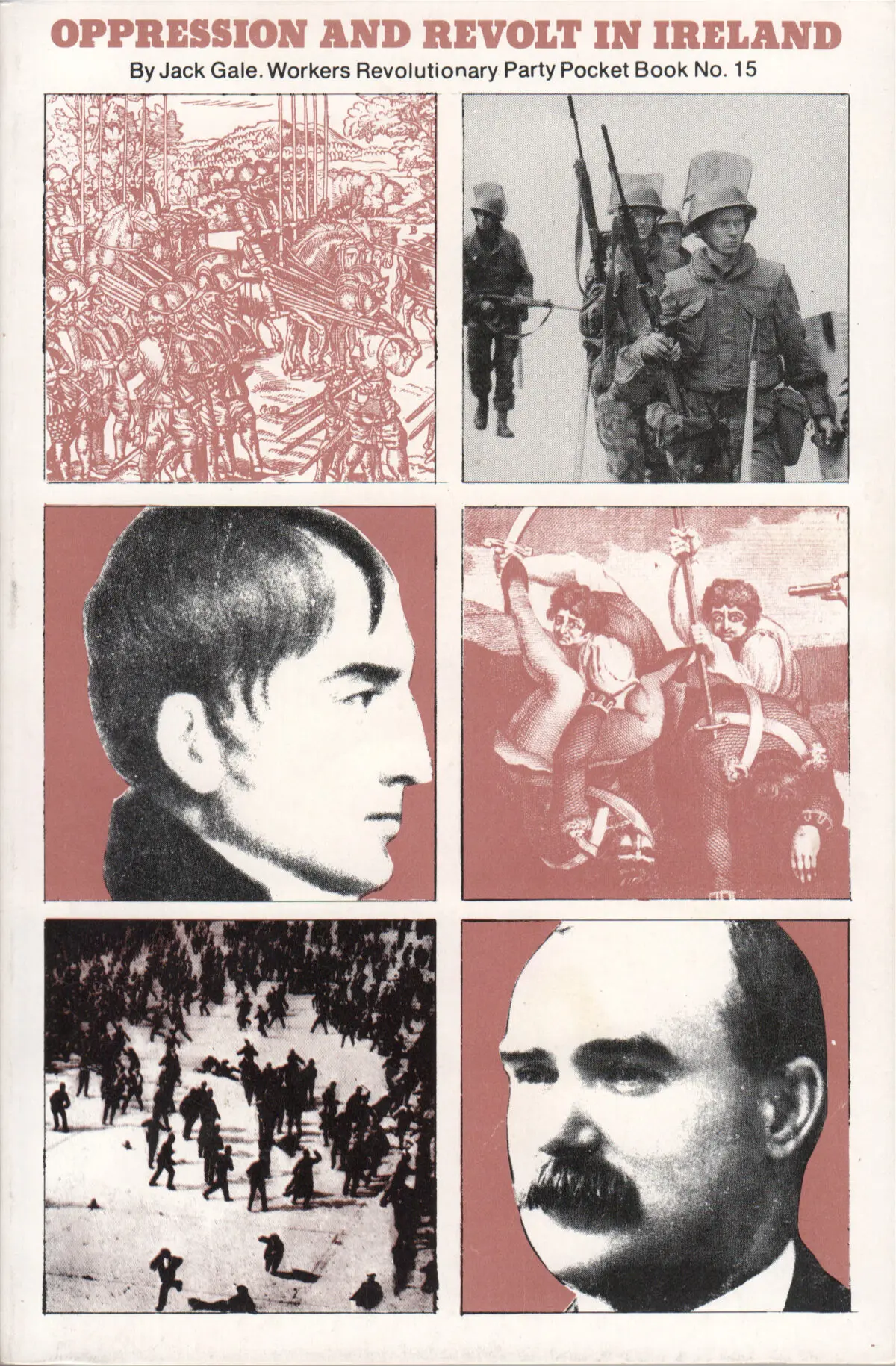

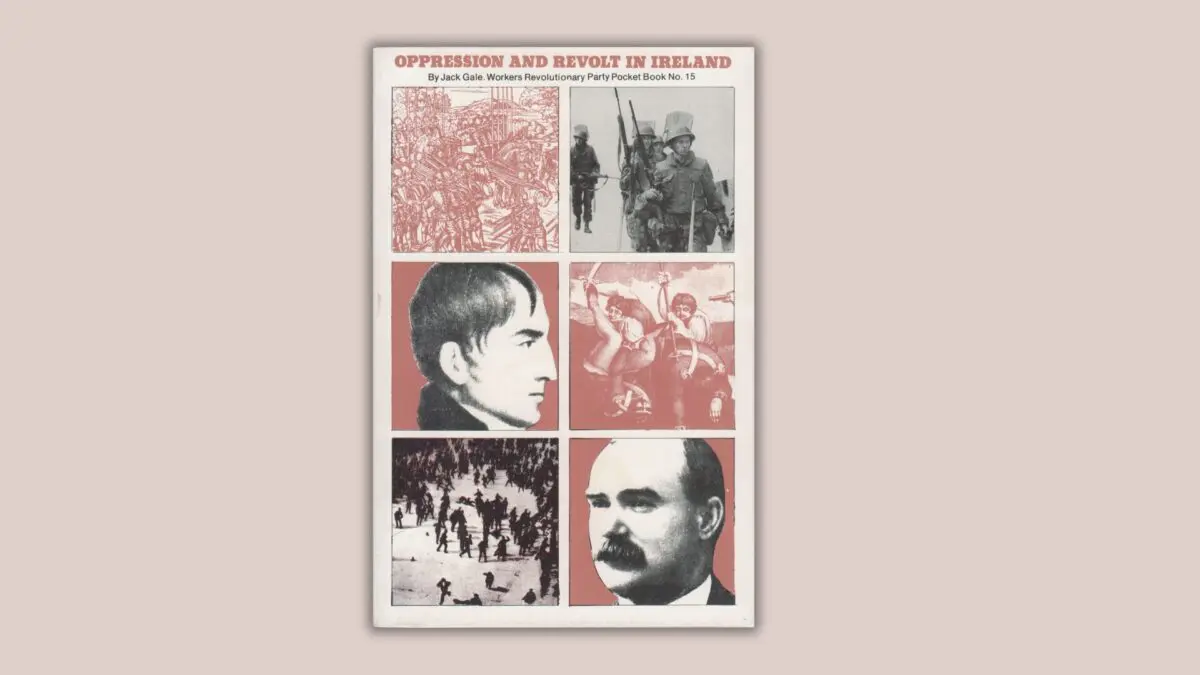
In this short Marxist history of Ireland, Jack Gale clearly outlines a millenium of oppression, exploitation and class struggle. Despite its relative brevity, this work is built from details, quotations and analysis, making for a rich reading experience. One of Gale’s primary arguments is that class, not religion, has always determined the social and political divisions in Ireland. He makes the convincing case that religion has for a thousand years served the English and Irish ruling classes—as well as the modern period’s middle classes— as a weapon to subdue and divide the Irish working class.
Oppression and Revolt in Ireland documents with statistical data—on population, deaths, emigration, grain production and exports, troop movements, protest demonstrations, resistance movements and class demographics—the consistently criminal exploitation of the Irish peasantry and working class, first by feudal overlords and later by capitalist agriculture and industry. Gale demonstrates throughout this history that the ruling classes have justified their power with the rhetorics of religion, civilization and democracy while at the same time defending that power with parliamentary chicanery, military might and outright savagery.
Central to Oppression and Revolt in Ireland is the repeatedly demonstrated Marxist premise that a revolutionary working class movement must remain independent, free of opportunistic leaders and programs.
No understanding of Irish history is possible without grasping how the aspirations of the workers and landless have been revolutionary aspirations—and how these have been betrayed, again and again, by leaders who used the myth of a ‘national,’ ‘above-class’ interest, the sole purpose of which has always been to leave the oppressed masses of Ireland under the heel of the capitalist and the landlord.
Gale also makes clear that, since the 18th century, the most progressive elements of the Irish peasantry and working class have understood themselves to be engaged in an international struggle shared with oppressed workers everywhere.
Lucid in its employment of the historical materialist method and making excellent use of contemporaneous commentary by Marx, Engels, Lenin and Trotsky, Oppression and Revolt in Ireland is an instructive gem of Marxist historiography.
Contents
I. Ireland—Annexed for Ever
II. His Majesty’s Most Loyal Subjects
III. From Famine to Fenian
IV. Ten Thousand Men with Rifles Up to Date
V. On Tory Principles Ireland Must be Kept
VI. Mutilation of the Irish Nation
VII. Not the Rack-Renting Slum-Owning Landlords
VIII. Connolly and Larkin as Revolutionaries
IX. Contrary to Everything We Stood For
