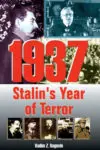
A major work of original historical research, 1937 provides a detailed and penetrating analysis of the causes and consequences of Stalin’s purges.
The author, an eminent Russian Marxist historian, argues that it is impossible to understand these tragic events apart from Stalin’s determination to wipe out all vestiges of the socialist opposition to his regime, above all, that associated with Leon Trotsky.
A major work of original historical research, 1937 provides a detailed and penetrating analysis of the causes and consequences of Stalin’s purges.
The author, an eminent Russian Marxist historian, argues that it is impossible to understand these tragic events apart from Stalin’s determination to wipe out all vestiges of the socialist opposition to his regime, above all, that associated with Leon Trotsky.
This is the first major study by a Russian Marxist historian of the most tragic and fateful year in the history of the Soviet Union. With an encyclopedic knowledge of Soviet source material, including archival documents released after the fall of the USSR, Vadim Rogovin presents a detailed and penetrating analysis of the causes, impact and consequences of Stalin’s purges. He demonstrates that the principal function of the terror was the physical annihilation of the substantial socialist opposition to Stalin’s bureaucratic regime.
Vadim Z. Rogovin (1937-1998) wrote about social inequality in the USSR and its implications for social justice, labor productivity, and social morality in Soviet society. Gaining access to Left Opposition writings in the 1960s and 1970s, he became convinced of the correctness of Leon Trotsky’s opposition to Stalin. In the 1990s, he wrote a seven-volume series on the rise of Stalinism and the history of the socialist-based opposition to Stalin’s rule.
Rogovin worked in the field of literary and aesthetic criticism, before becoming a Doctor of Philosophical Sciences at the Institute of Sociology of the Russian Academy of Sciences in Moscow from the late 1970s until his death. His interest in researching the allocation of wealth and privileges in the Soviet Union grew out of political conclusions he drew about the origins of the Soviet bureaucracy. His grandfather had died in the Stalinist purges.
In the late 1980s, he became an outspoken critic of Mikhail Gorbachev’s pro-market economic reforms and their negative impact on the living standards of the broad mass of the population. His articles in the popular Soviet press about the positions of the Left Opposition on major questions of politics and policy were widely read.
In the early 1990s, he began publishing what would become a seven-volume series on the rise of Stalinism and the history of the socialist-based opposition to Stalin’s rule. Before his untimely death due to cancer in 1998, he delivered lectures in Europe, the United States, Australia, and Latin America, in a world tour organized by the International Committee of the Fourth International.
Additional biographical information about Rogovin and commentary about his contributions can be found here, in a tribute given to him on the occasion of his sixtieth birthday by David North, the Chairman of the international editorial board of the World Socialist Web Site.





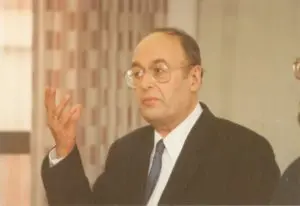 Vadim Z. Rogovin (1937-1998) wrote about social inequality in the USSR and its implications for social justice, labor productivity, and social morality in Soviet society. Gaining access to Left Opposition writings in the 1960s and 1970s, he became convinced of the correctness of Leon Trotsky’s opposition to Stalin. In the 1990s, he wrote a seven-volume series on the rise of Stalinism and the history of the socialist-based opposition to Stalin’s rule.
 In the late 1980s, he became an outspoken critic of Mikhail Gorbachev’s pro-market economic reforms and their negative impact on the living standards of the broad mass of the population. His articles in the popular Soviet press about the positions of the Left Opposition on major questions of politics and policy were widely read.